Raw Material Seasonality and Puree Viscosity: Why the Same Recipe Runs Differently
A fruit puree line can follow the same recipe, the same heat profile, and the same screen setup—and still behave differently from week to week.
For a process manager, that variation shows up as thick or thin mash, slow pressing, drifting texture, overloaded finishers, unstable filtration, and difficult handovers between shifts. The root cause is often not operator error. It is the raw material.
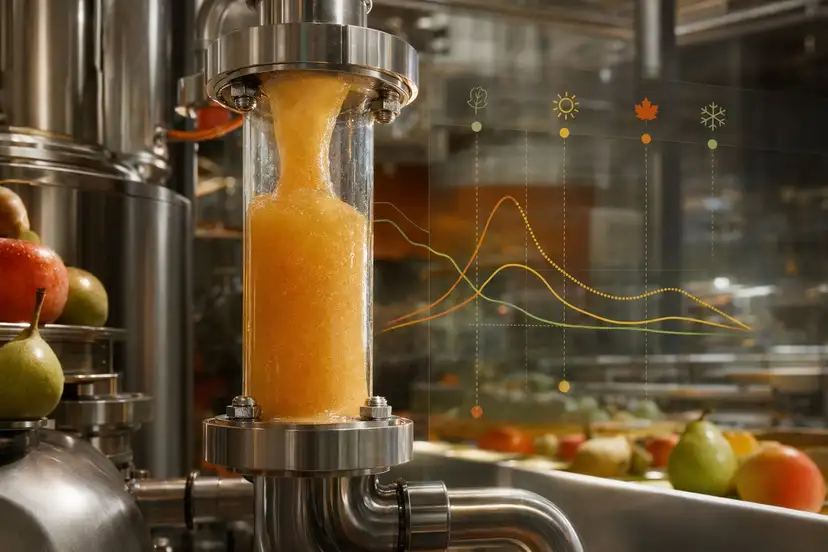
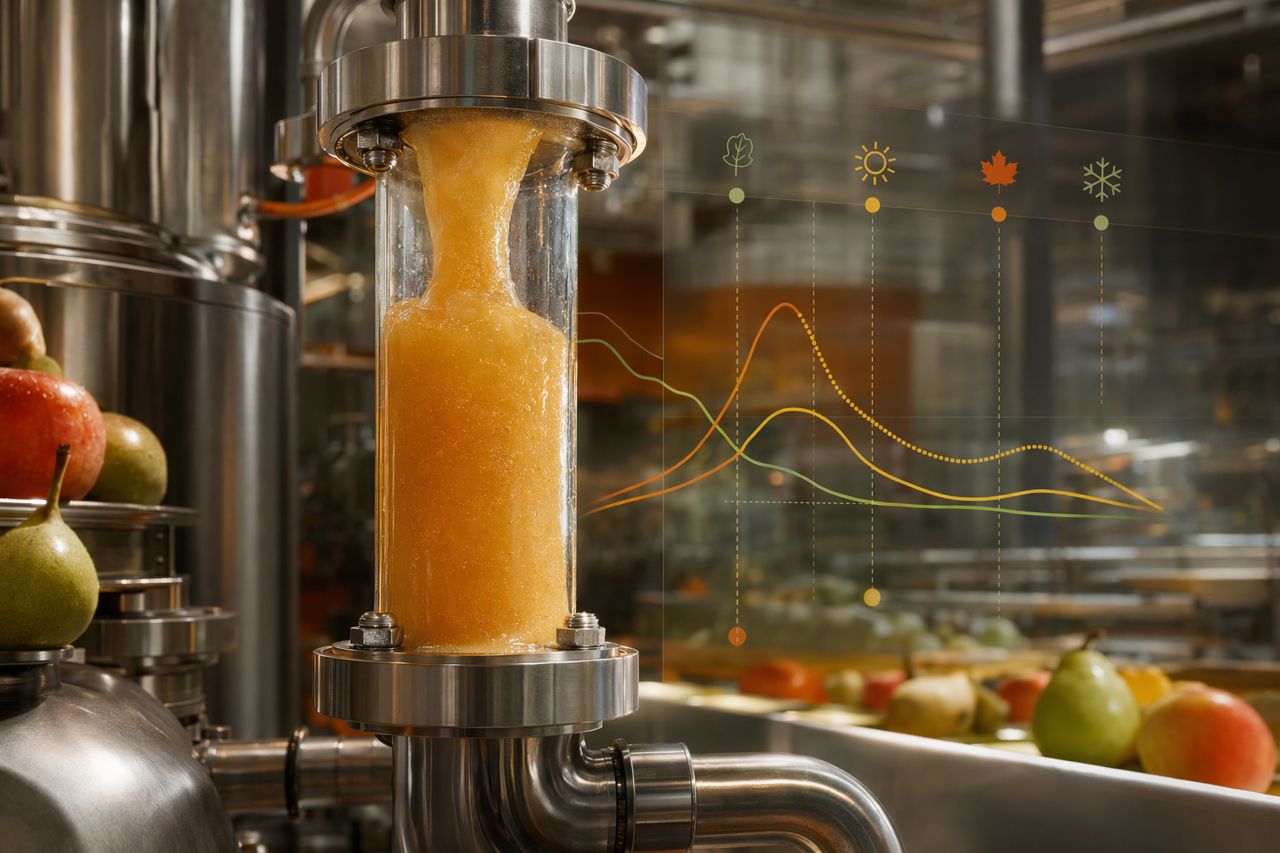
Fruit is a living input. Variety, maturity, storage history, field conditions, and harvest timing all change the way apple, pear, apricot, peach, mango, and berry material breaks down in the plant. These changes affect pectin structure, cell wall integrity, soluble solids, insoluble fiber, starch behavior, and natural cloud stability.
VelvetYield supports puree and baby food plants with enzyme solutions designed for controlled fruit breakdown, viscosity management, pressing performance, and repeatable texture. As an enzyme supplier for fruit puree processing, our focus is practical: help your line run closer to target, even when incoming fruit does not.
Why viscosity changes when the recipe does not
Puree viscosity is not one single variable. It is the result of several raw-material properties acting together.
1. Maturity shifts cell wall strength
Under-ripe fruit often has firmer tissue and a more resistant cell wall network. It may require more mechanical work, longer hold time, or adjusted enzyme contact to release juice and soften texture.
Over-ripe fruit can behave differently. Cell walls may already be partially weakened, but soluble pectin and fine particles can increase body, stickiness, and screen loading.
The same grinder setting can therefore produce two very different mashes.
2. Variety affects natural pectin behavior
Two apple lots can carry different pectin profiles. One lot may release into a smooth, pumpable puree. Another may form a higher-viscosity matrix that slows heat transfer, de-aeration, finishing, and filtration.
In mango, pear, apricot, and peach processing, variety differences can also affect fiber length, pulp mouthfeel, and separation behavior.
3. Storage changes fruit structure before it reaches the line
Cold storage, ripening rooms, controlled atmosphere storage, and long holding periods all influence fruit physiology. Some lots soften evenly. Others develop mixed maturity, bruised tissue, or starch-to-sugar transitions that change mash behavior.
A lot that looked acceptable at intake can still create unstable viscosity after milling.
4. Weather and harvest stress affect solids and fiber
Dry growing periods, heavy rain before harvest, heat stress, and late-season fruit can all alter the balance of soluble solids, water content, and structural material.
This matters because your line does not process fruit averages. It processes each truckload.
What seasonality looks like on the plant floor
Seasonal viscosity drift usually appears as a cluster of small operational issues rather than one obvious failure.
Common signs include:
- Mash that pumps unevenly from preparation to heating
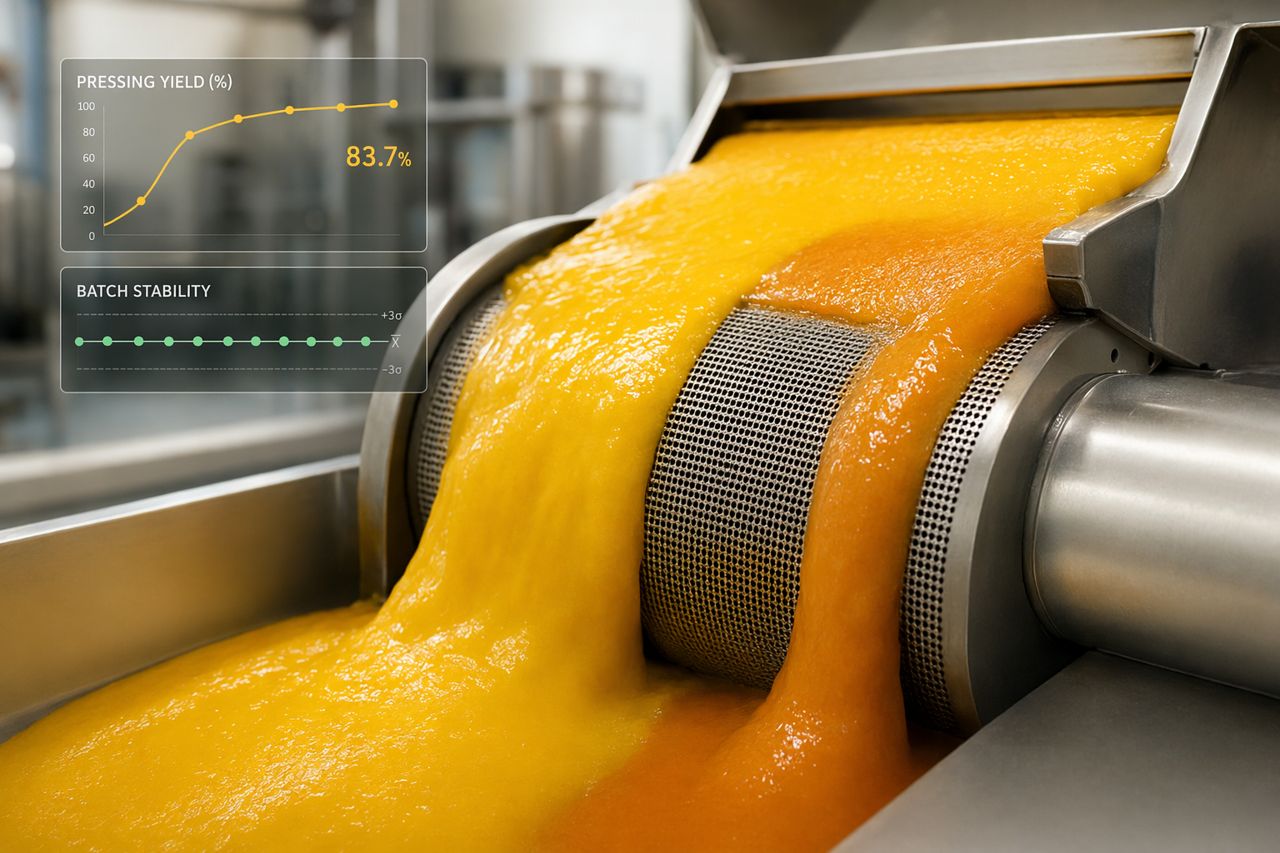
- Pressing yield that falls even though fruit grade looks similar
- Finisher screens blinding earlier than expected
- Texture that swings between watery, grainy, stringy, or overly thick
- More frequent operator adjustment of dilution, recirculation, or hold time
- Longer clean-down due to sticky pectin-rich residues
- Filtration or clarification steps running below expected flow
- Baby food texture targets becoming harder to hold batch to batch
These problems cost time. They also create decision pressure: slow the line, rework the batch, dilute texture, change screens, or accept lower recovery.
Why enzymes help stabilize puree behavior
Enzymes are not a substitute for good fruit selection or disciplined process control. They are a process tool for managing natural variation in fruit structure.
A well-matched enzyme program can help:
- Reduce excessive viscosity in mash or puree
- Improve juice and puree release from fruit tissue
- Support smoother pressing and finishing
- Improve filtration behavior where clarification is required
- Increase texture consistency across raw-material lots
- Reduce batch-to-batch troubleshooting
- Support cleaner heat transfer and more predictable pumping
For puree and baby food plants, the goal is controlled breakdown—not over-processing. The enzyme choice, addition point, contact window, and thermal stop must fit the product target.
The risk of treating all fruit lots the same
A fixed enzyme approach can be too light for resistant early-season fruit and too aggressive for soft late-season fruit. Both outcomes create avoidable plant issues.
If treatment is too light, the line may see poor yield, thick mash, and slow finishing.
If treatment is too aggressive, texture can move away from the intended body, especially in products where mouthfeel and spoonability matter.
The best approach is a controlled operating range: enough flexibility to respond to the fruit, but simple enough for shift teams to run reliably.
Practical control points for process managers
A seasonal viscosity plan does not need to be complicated. It should connect raw-material observation to enzyme and process decisions.
At intake
Record variety, maturity, storage origin, visible firmness, bruising, and lot history. These observations help predict how the fruit will behave before it reaches the mill.
After milling
Track mash appearance, pump load, fiber feel, and early viscosity trend. This is often the first point where lot differences become operational.
During enzyme contact
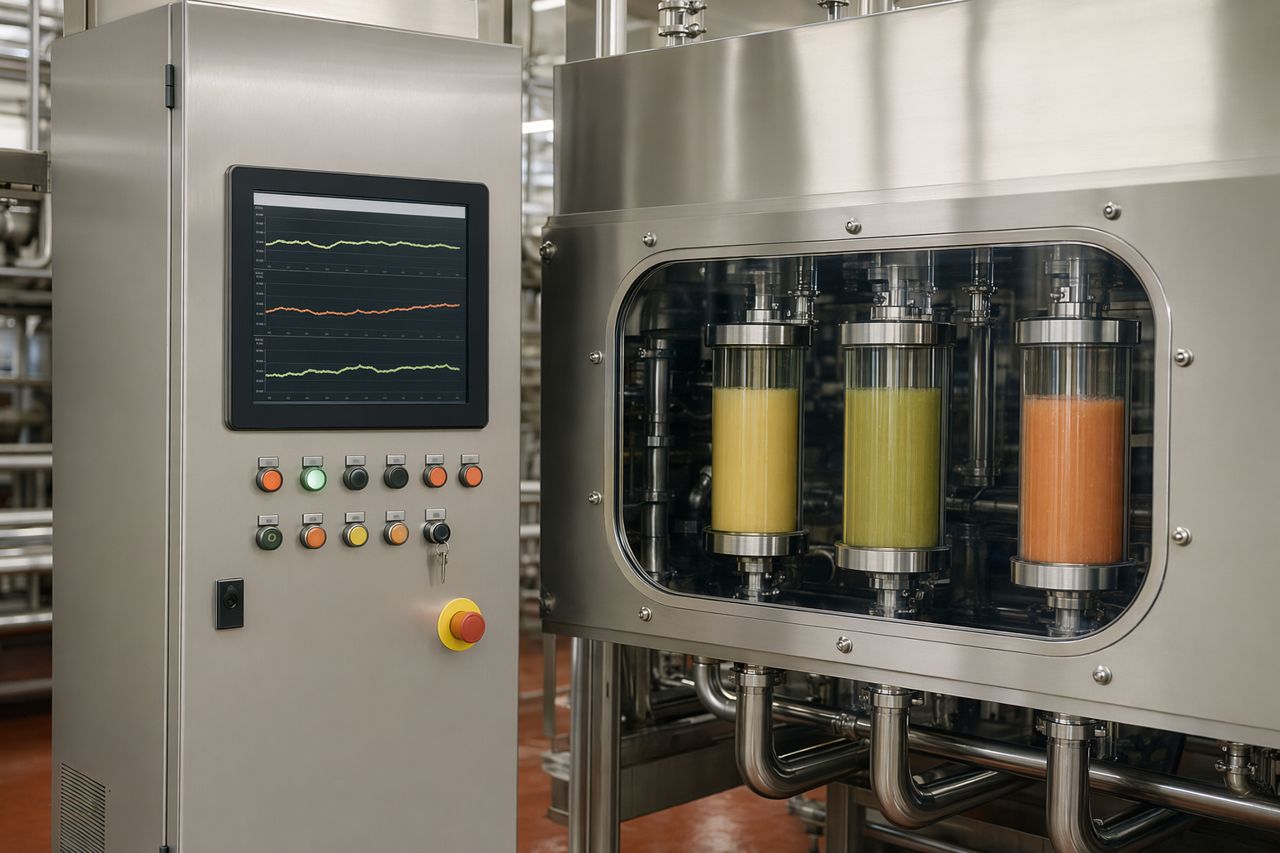
Control mixing, temperature window, residence time, and addition consistency. Uneven contact can create uneven texture even when the enzyme choice is correct.
Before finishing or pressing
Check whether the mash is releasing as expected. A short process review here can prevent hours of downstream screen loading, poor separation, or unstable texture.
At the thermal stop
Make sure the enzyme treatment is ended at the intended process stage. This protects final texture and supports repeatable product release.
Building a seasonal enzyme strategy
VelvetYield helps plants build enzyme programs around real line behavior, not generic assumptions.
A typical seasonal support discussion may include:
- Fruit type, variety mix, and harvest calendar
- Product target: smooth puree, textured puree, clarified base, concentrate feed, or baby food blend
- Current pain points in viscosity, pressing, finishing, or filtration
- Addition point and mixing capability
- Heating profile and available contact window
- Texture limits and sensory expectations
- Batch records showing seasonal drift
From there, VelvetYield can recommend a practical enzyme direction and plant trial plan. The aim is not to make every fruit lot identical. The aim is to keep the process inside a tighter, more profitable operating band.
What better control can unlock
When raw-material variation is managed earlier in the process, the whole line becomes easier to run.
Plants typically look for improvements such as:
- More predictable puree viscosity
- Better pressing or extraction yield
- Reduced finisher overload
- More stable texture release
- Smoother pumping and transfer
- Fewer batch corrections
- Better filtration behavior where applicable
- Less operator intervention during seasonal transitions
These are practical gains: more usable product from the same fruit, fewer surprises, and a calmer production day.
A calmer way to handle variable fruit
Seasonality will never disappear from fruit processing. The harvest will change. Storage lots will change. Varieties will rotate. But the line can be prepared.
With the right enzyme support, process managers can respond to fruit variability before it becomes a bottleneck. VelvetYield brings calm, technical support to puree and baby food operations that need reliable viscosity, yield, texture, and throughput.
If your plant is seeing seasonal swings in puree behavior, request a quote and share your fruit type, process step, and current bottleneck. VelvetYield will help you identify an enzyme approach suited to your line.