Seven Puree Line Bottlenecks That Appear Before the Filler
In a fruit puree and baby food plant, filler downtime is often blamed on the filler. On the floor, the real restriction is frequently upstream: a mill that loads unevenly, a finisher that blinds, a screen that needs too much attention, or a transfer pump that is fighting viscosity instead of moving product.
For process managers, these issues are not just mechanical. Fruit variety, ripeness, pulp structure, pectin behavior, heat history, and hold time all change how puree moves. A well-designed enzyme program can help make that movement more predictable before the product reaches the filling valve.
VelvetYield works as an enzyme supplier for fruit puree processing, helping plants tune viscosity, pressing yield, texture consistency, filtration behavior, and batch reliability without adding unnecessary complexity to daily operation.
Why bottlenecks show up before filling
Puree lines are continuous in theory, but fruit behaves in batches. Apricot, apple, pear, mango, peach, and mixed fruit bases can shift in texture from truck to truck and drum to drum. When the puree structure is too resistant, the line absorbs that variability through slower throughput, higher recirculation, screen cleaning, deaerator instability, and pump stress.
Common warning signs include:
- Reduced flow after milling or hot break
- Rising backpressure before screens or finishers
- More frequent screen washdowns
- Air removal becoming inconsistent
- Hold tube velocity drifting out of target range
- Surge tanks developing uneven texture zones
- Transfer pumps running harder at the same setpoint
- Filler feed becoming unstable even when the filler is mechanically sound
The goal is not to make every puree thin. The goal is to reach the right texture, at the right point in the process, with less variation.
1. Mills: when fruit structure enters the line unevenly
Milling is where raw fruit variability becomes a process problem. Underripe fruit, fibrous lots, cold fruit, or uneven preheating can create a puree stream with inconsistent particle release and pulp distribution.
What operators see
- Surging load on the mill
- Uneven puree flow after the mill
- Pockets of fibrous material moving downstream
- More dependence on mechanical shear to create a uniform base
How enzymes can help
A controlled enzyme step can soften cell wall structure and support more even fruit breakdown before the line asks screens, finishers, or pumps to solve the problem. This can reduce the need for aggressive mechanical work while preserving a clean, familiar puree texture.
Practical proof point
Plants often evaluate success by comparing mill discharge consistency, downstream pressure stability, and whether the same fruit type runs with fewer setpoint changes across the shift.
2. Finishers: when texture control becomes a restriction
Finishers protect product quality, but they can also become the first major bottleneck. If pulp structure is too resistant, finishers must work harder to separate coarse material while maintaining target mouthfeel.
What operators see
- Lower finisher throughput
- Higher reject volume than expected
- Texture drifting between early and late batch
- Increased wear on screens and paddles
How enzymes can help
The right enzyme program improves the way fruit solids release and move, allowing finishers to do their intended job with less forced separation. For baby food and smooth puree applications, this supports a more repeatable texture window without over-processing.
Practical proof point
Track acceptable puree output versus reject stream, then compare texture consistency at equal finisher settings. A strong enzyme fit should reduce the need to chase texture with mechanical adjustments.
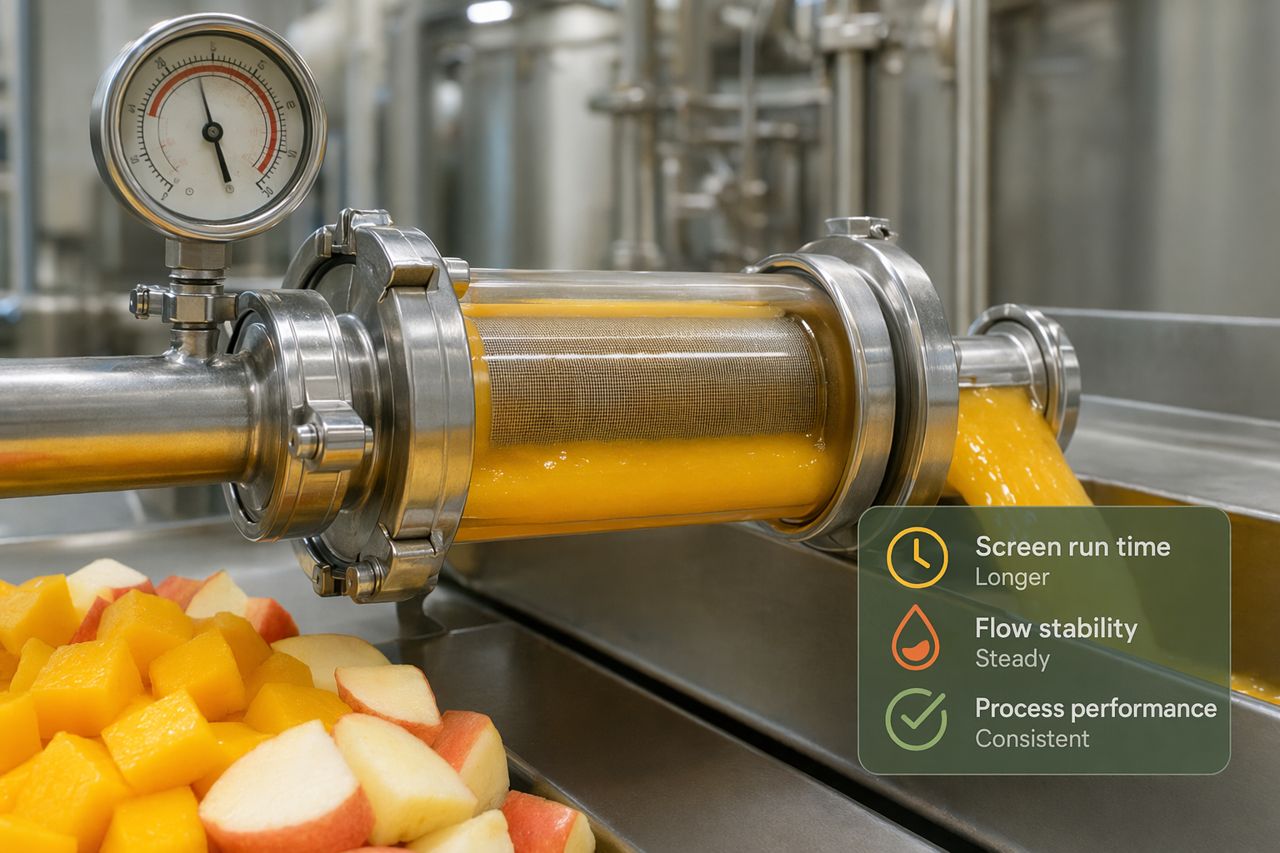
3. Screens: when blinding steals line time
Screens are sensitive to pulp fragments, peel residues, seed particles, and gel-like pectin behavior. Once blinding begins, the line may still run, but operators spend more time managing pressure than making product.
What operators see
- Gradual pressure rise before the screen
- Shorter intervals between cleaning
- Uneven flow to downstream equipment
- Increased product loss during screen intervention
How enzymes can help
Enzymes can reduce the tendency of pectin-rich material to form sticky, screen-blocking structures. The result is not simply lower viscosity; it is improved passage behavior and fewer abrupt restrictions.
Practical proof point
Compare screen run length, clean-in-place frequency, and pressure trend stability across matched fruit blends. The best result is a calmer pressure curve, not just a faster initial flow.
4. Deaerators: when viscosity traps air
Deaeration depends on predictable flow, surface behavior, and residence. When puree is too viscous or inconsistent, air release becomes harder to control. This can affect appearance, oxidation control, filling accuracy, and downstream heat transfer.
What operators see
- Foam or entrained air persisting after deaeration
- Vacuum instability
- Level fluctuation inside the deaerator
- More visible bubbles at the filler bowl or feed tank
How enzymes can help
By tuning puree rheology upstream, enzymes help air separate more reliably without forcing the plant to compensate with excessive recirculation or temperature changes. This is especially useful in gentle puree lines where texture must remain soft and clean.
Practical proof point
Measure deaerator stability by level control, vacuum steadiness, visual air reduction, and fewer filler feed disturbances after the same fruit preparation route.
5. Hold tubes: when flow behavior affects thermal confidence
Hold tubes require steady flow behavior. If puree viscosity swings, velocity profile and pressure drop can become less predictable. For baby food and aseptic puree operations, that instability creates extra attention around process control.
What operators see
- Pressure drop varying between batches
- Operators reducing throughput to stay comfortable
- Difficulty maintaining stable thermal processing conditions
- Product texture changing after heat exposure
How enzymes can help
A pre-heat or pre-hold enzyme strategy can reduce viscosity variability before the thermal section, allowing the hold tube to operate with steadier flow characteristics. Enzyme selection must be aligned with the plant’s heat step so the treatment fits the food safety and product quality plan.
Practical proof point
Look for steadier pressure drop, fewer throughput reductions, and less operator intervention during product changeovers or fruit variety changes.
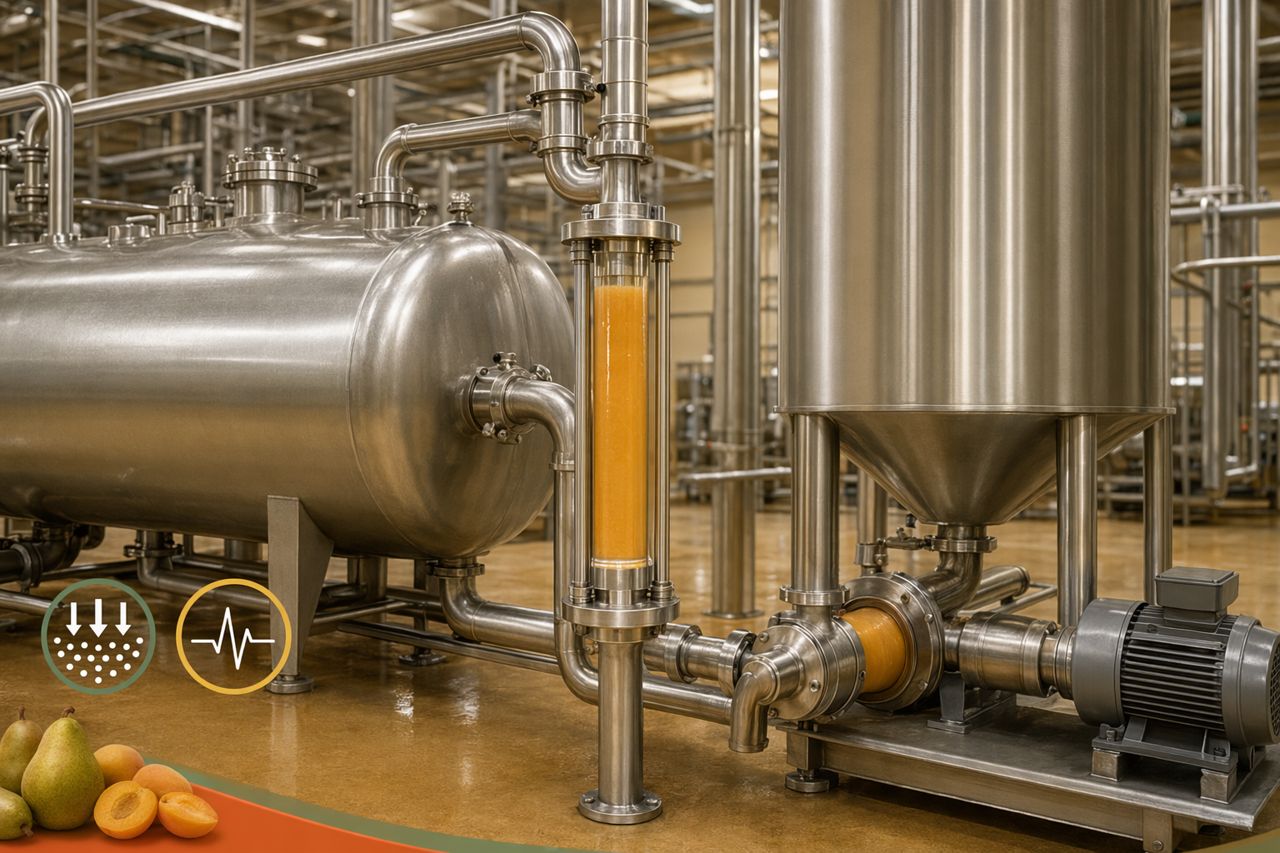
6. Surge tanks: when calm storage becomes texture drift
Surge tanks are meant to buffer the line. But if puree structure is unstable, tanks can become zones of separation, thickening, settling, or uneven feed to the next stage.
What operators see
- Top-to-bottom texture differences
- Agitators creating inconsistent results
- Recirculation needed to restore uniformity
- Filler feed varying as tank level changes
How enzymes can help
Enzyme programs can support a more stable puree body before surge storage. The aim is to reduce drift during practical hold times, so the tank behaves like a buffer instead of a new source of variation.
Practical proof point
Sample texture at different tank levels and times, then compare the variation before and after enzyme optimization. A successful program makes the tank less sensitive to level and hold duration.
7. Transfer pumps: when viscosity becomes energy, shear, and heat
Transfer pumps reveal what the rest of the line is feeling. When puree is difficult to move, pumps may need higher speed or pressure, which can increase shear, heat pickup, and maintenance load.
What operators see
- Pump speed increasing to maintain flow
- Pressure alarms or unstable discharge pressure
- More heat input than expected during transfer
- Texture damage in sensitive fruit bases
How enzymes can help
By improving flow behavior upstream, enzymes can reduce the burden on pumps and help protect texture. This is not about making puree watery. It is about moving a target texture with less mechanical force.
Practical proof point
Compare pump speed, discharge pressure, temperature rise, and texture after transfer at the same production rate.
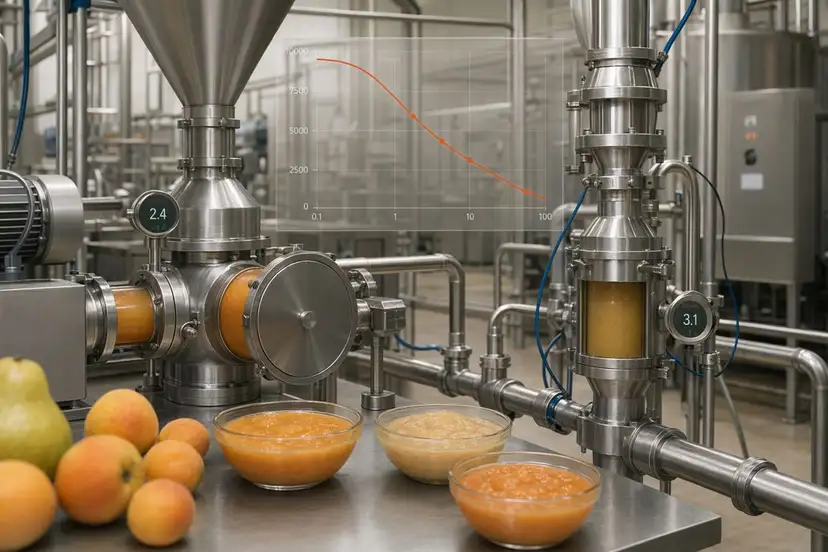
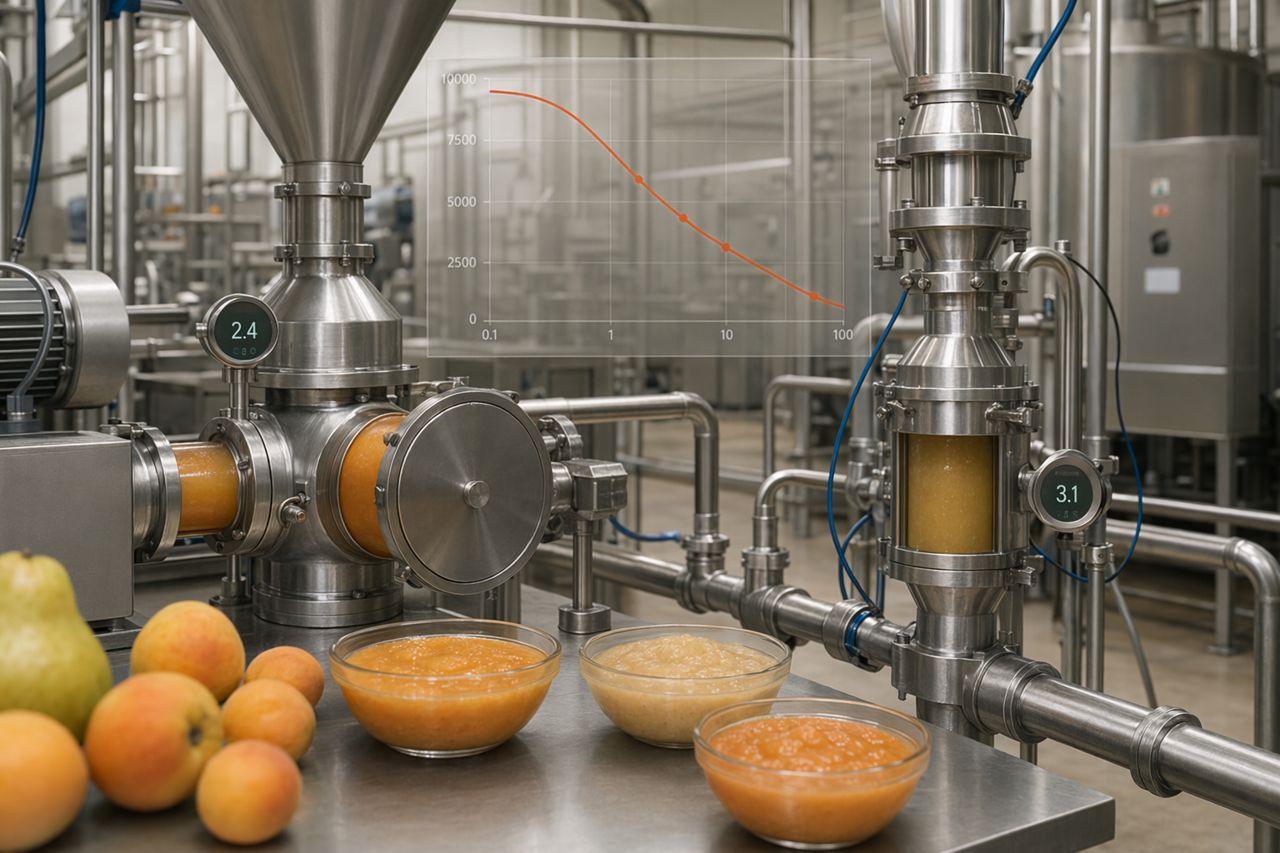
A simple diagnostic: follow the pressure and texture curve
Before changing hardware, map where the line first becomes unstable.
- Record pressure before and after mills, finishers, screens, heat sections, and transfer pumps.
- Note where operators slow the line or intervene.
- Compare early-batch, mid-batch, and late-batch texture.
- Track cleaning events and product loss around restrictions.
- Link each issue to fruit type, maturity, temperature, and hold time.
This creates a practical baseline for enzyme trials. The strongest programs are built from plant-floor observations, not generic dosage assumptions.
Where VelvetYield fits
VelvetYield supplies enzyme solutions for fruit puree processing with a focus on controlled viscosity reduction, improved yield, smoother finishing, better filtration behavior, and repeatable batch performance.
Our support is built around the realities of puree and baby food plants:
- Fruit-to-fruit variability
- Gentle texture requirements
- Aseptic and hot-fill process constraints
- Existing mills, screens, finishers, deaerators, tanks, and pumps
- Operator-friendly addition points
- Heat steps that fit the enzyme plan
- Plant trials with clear production metrics
We help process teams define the right treatment window, confirm compatibility with the line, and evaluate performance through measurable operating results.
Request a quote for a puree line enzyme program
If your line is slowing before the filler, the restriction may be upstream in the fruit structure itself. VelvetYield can help review your fruit type, process map, target texture, and bottleneck data.
Request a quote through the on-site contact form and tell us what you are processing, where the line slows, and what improvement matters most: yield, viscosity control, screen life, deaeration, pumping stability, or batch consistency.