Puree Deaeration, Foaming, and Viscosity | VelvetYield
Why fruit puree viscosity, trapped air, foam, pump shear, and fill-weight variation often appear together—and how enzyme-supported process control can improve batch reliability.
Request pricing Why fruit puree viscosity, trapped air, foam, pump shear, and fill-weight variation often appear together—and how enzyme-supported process control can improve batch reliability.
Request pricingIn fruit puree and baby food production, deaeration issues rarely arrive alone. A batch that foams in the balance tank may also run heavy through the pump, hesitate at the filler, leave air pockets in packs, or show wider fill-weight variation than expected.
The connection is usually not mysterious: viscosity, trapped air, pump shear, and fruit structure are working as one system.
For a process manager, the practical question is not only “how do we remove air?” It is also: why is this puree holding air so well in the first place?
VelvetYield supports plants that need more predictable puree flow, pressing yield, texture consistency, and downstream behavior. As an enzyme supplier for fruit puree processing, we focus on the part of the system that often gets overlooked: the fruit matrix itself.
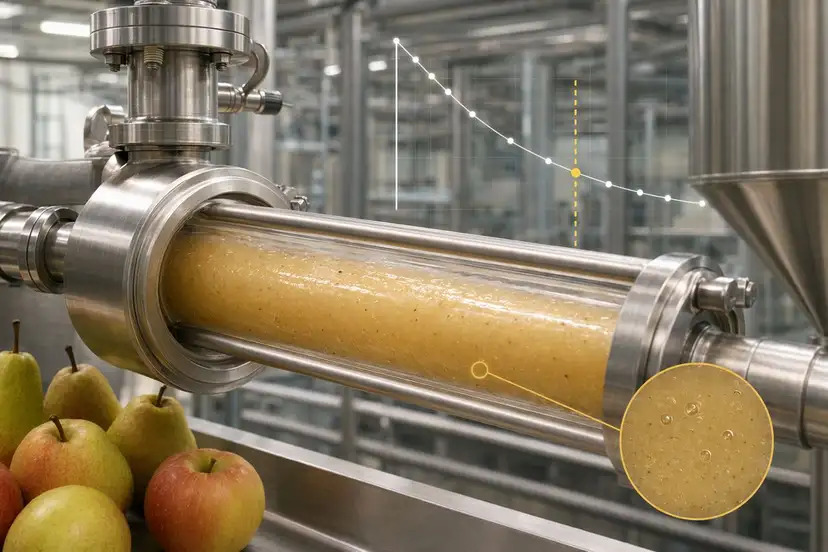
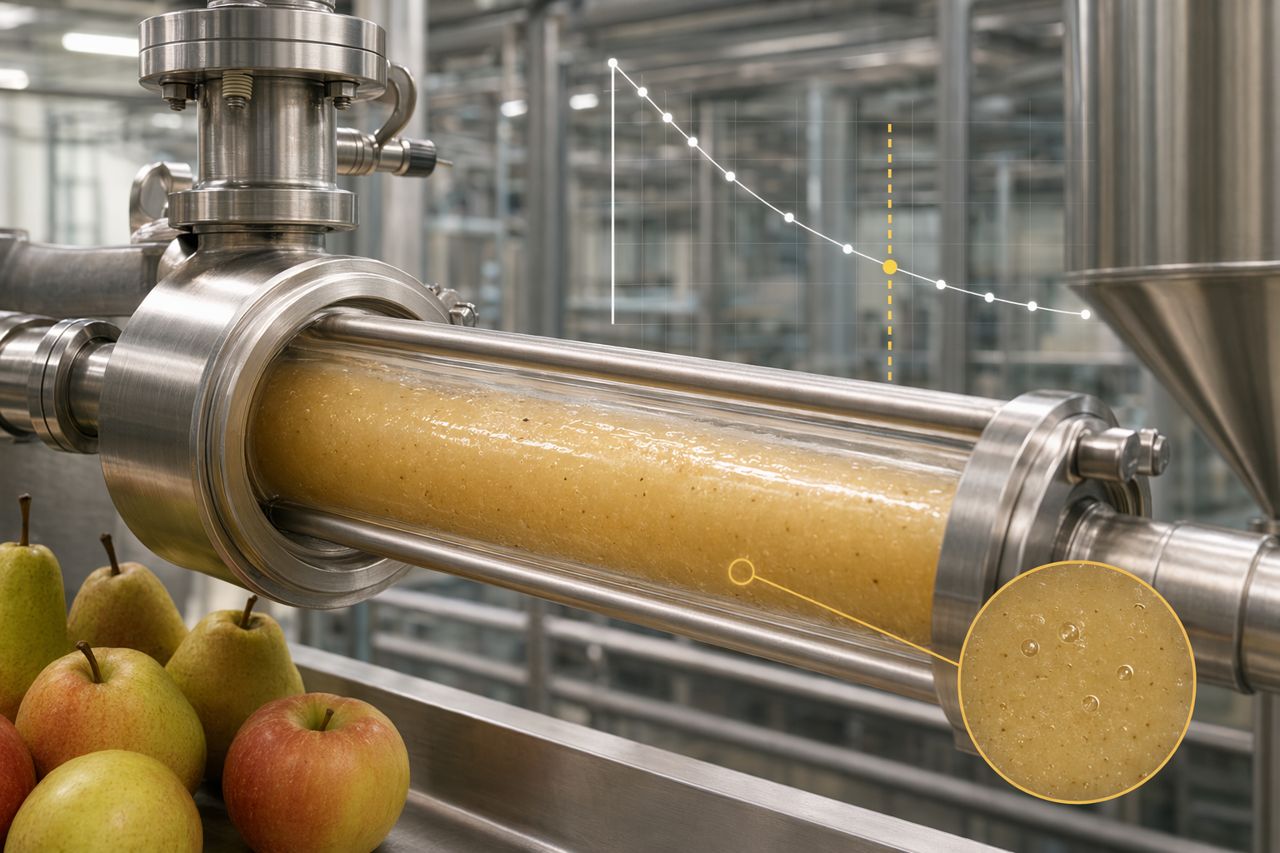
Fresh fruit puree is not a simple liquid. It is a structured mixture of insoluble pulp, soluble pectin, starch fragments, fibers, fine particles, dissolved solids, and water. That structure can make air surprisingly stable.
Air is introduced during common plant steps:
Once air is dispersed into a viscous puree, it can become slow to rise and difficult to collapse. The batch may look dense and uniform, but fine bubbles remain suspended.
This matters because trapped air can affect:
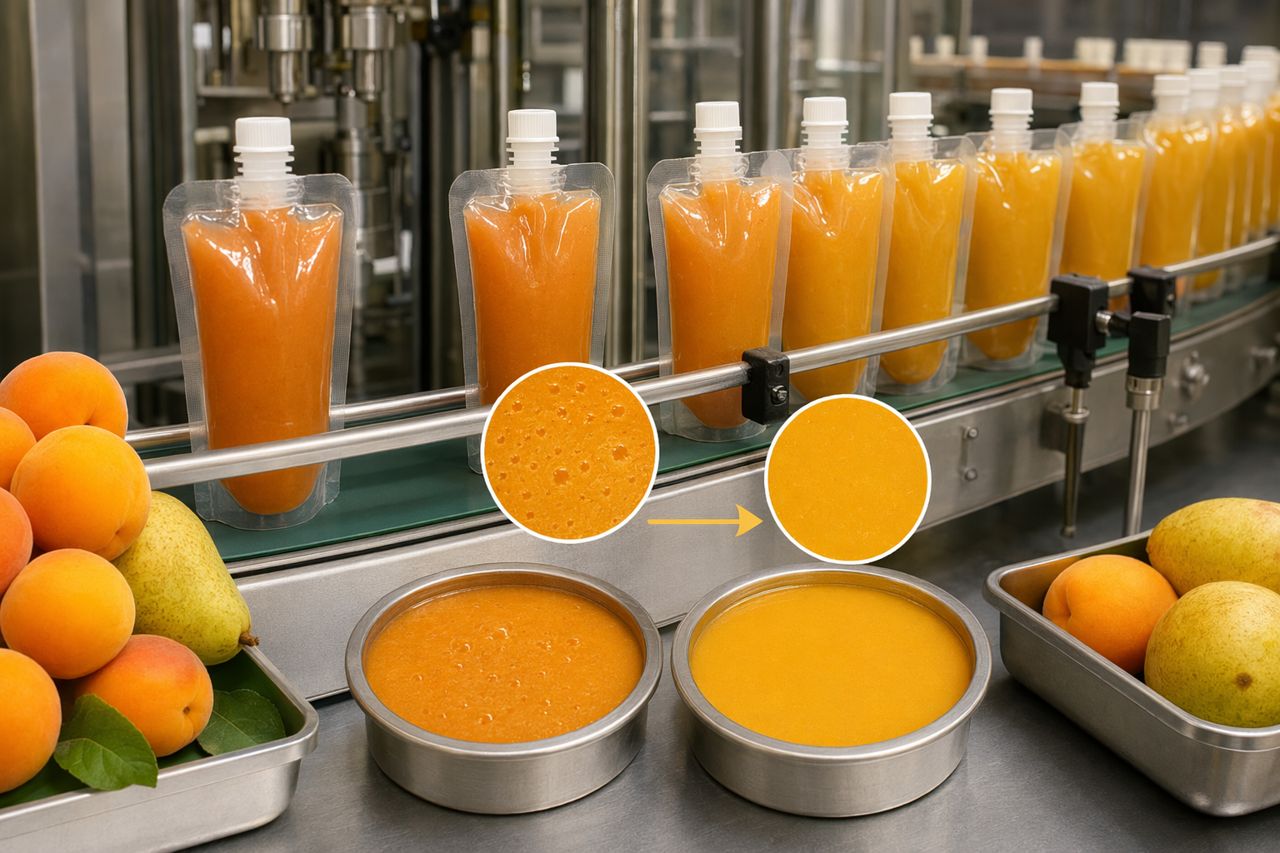
In baby food and smooth puree lines, even small variations can be visible because the product is expected to look stable, gentle, and uniform.
Viscosity is often treated as a finished-product texture target. That is important—but in processing, viscosity also controls how a puree moves, releases air, and responds to shear.
High or unstable viscosity can lead to:
The result is a familiar plant-floor pattern: the product specification may be correct on paper, while the batch still behaves unpredictably in the line.
Foam changes how a puree occupies space. A foamy puree contains dispersed air, so its density and flow behavior can shift during holding, transfer, and filling.
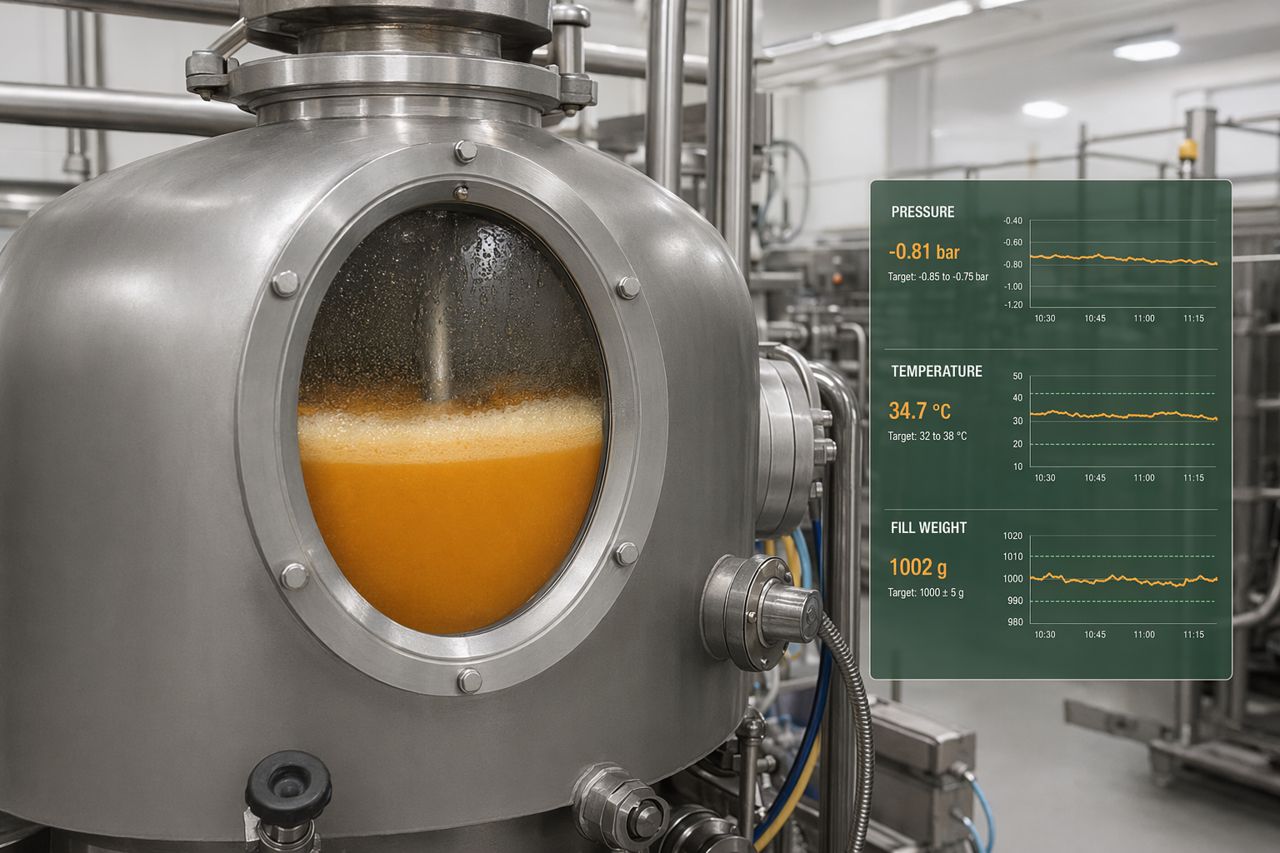
That means the same filler setting may not always deliver the same net product mass. As bubbles collapse, product density changes. As viscosity shifts, the filler response changes. As shear increases, more air may be pulled in.
This is why operators may see:
When these symptoms appear together, it is worth looking upstream—not only at the filler.
Many deaeration discussions begin with vacuum level, tank design, temperature, or residence time. Those factors are essential. But the puree’s internal structure determines how easily the air can move out.
Fruit components that influence air retention include:
If the matrix is too resistant, mechanical deaeration has to work harder. More vacuum, longer holding, or more aggressive agitation may help—but these can also create new bottlenecks.
Enzyme processing is not about thinning every batch as much as possible. In puree and baby food plants, the goal is controlled modification: enough to improve flow and air release while protecting the intended texture.
A well-selected enzyme program can help plants:
Different fruits behave differently. Apple, pear, apricot, peach, and mango can each require different treatment logic depending on variety, ripeness, puree target, pulp level, and thermal process.
VelvetYield works with fruit puree processors to match enzyme choice and process timing to the line—not just to the fruit name.
This can happen when fine air remains dispersed after deaeration. The surface may look acceptable, while density changes during filling. If fill weights drift as the run progresses, air release and viscosity stability should be reviewed together.
Pump shear can expose structure problems. A puree that seems stable in the kettle may foam after transfer because the matrix traps newly introduced air. In this case, simply slowing the pump may not solve the root cause.
The equipment may be functioning correctly. The difference may be pectin structure, pulp fineness, starch contribution, or seasonal fruit variation. A process that works for pear may not behave the same way with mango or apricot.
Overfill can protect compliance, but it also hides yield loss. When deaeration and viscosity become more consistent, plants often gain more control over giveaway and batch utilization.
Thermal steps can change how puree structure expresses itself. Enzyme timing, contact conditions, and inactivation point should be considered alongside the heat process already validated by the plant.
When deaeration, foaming, and viscosity show up together, start with a structured review rather than single-point adjustment.
Identify every point where the product is falling, splashing, recirculating, pulling vortex, or moving through high shear. Watch transitions between tanks, pumps, heat exchangers, and filler feed.
A puree may test acceptably before transfer but behave differently after pumping. Track whether shear causes thickening, thinning, or foam stabilization.
Visible foam on the surface is only part of the issue. Fine air dispersed inside the puree can be more important for density, filler repeatability, and pack appearance.
Variety, ripeness, storage, and puree preparation can change the response. If the issue appears seasonally, the enzyme approach may need adjustment by fruit condition.
The right enzyme choice, addition point, temperature window, and holding stage can help the puree release air while still meeting final texture expectations.
A stable puree process does not require constant correction. Operators should see calm transfer, predictable tank drawdown, efficient deaeration, and repeatable filling.
Useful improvements may include:
These are practical production outcomes—not lab abstractions.
VelvetYield supplies enzyme solutions for fruit puree processing with a focus on plant-floor performance: controlled viscosity, smoother deaeration behavior, stable texture, and dependable batch handling.
Our support can include:
We do not treat deaeration as a standalone equipment issue. We look at the puree system: fruit structure, thermal path, shear exposure, enzyme timing, and final product requirements.
If deaeration, foam, or fill-weight variation is limiting your puree line, VelvetYield can help you evaluate an enzyme-supported approach.
Request a quote through the on-site contact form and tell us the fruit type, process stage, target texture, and the line behavior you want to improve.
Tell us your application and volume — we reply with pricing and lead time.