Mango & Banana Puree Transfer Enzyme Support | VelvetYield
Practical enzyme guidance for tropical puree plants managing mango, banana, fiber, pulp, starch, viscosity, pump pressure, filtration behavior, and batch reliability.
Request pricing Practical enzyme guidance for tropical puree plants managing mango, banana, fiber, pulp, starch, viscosity, pump pressure, filtration behavior, and batch reliability.
Request pricingTropical puree can look simple in a balance tank and become difficult the moment it moves through a plant. Mango brings pulp and fibrous structure. Banana brings starch-driven body and rapid viscosity build. Guava, papaya, passion fruit, and blended bases each add their own pectin, fiber, seed, and soluble solid behavior.
For a fruit puree and baby food plant, the result can be familiar: rising pump load, uneven transfer time, unstable texture, screen blinding, variable deaeration, and batch-to-batch adjustment at the worst point in the schedule.
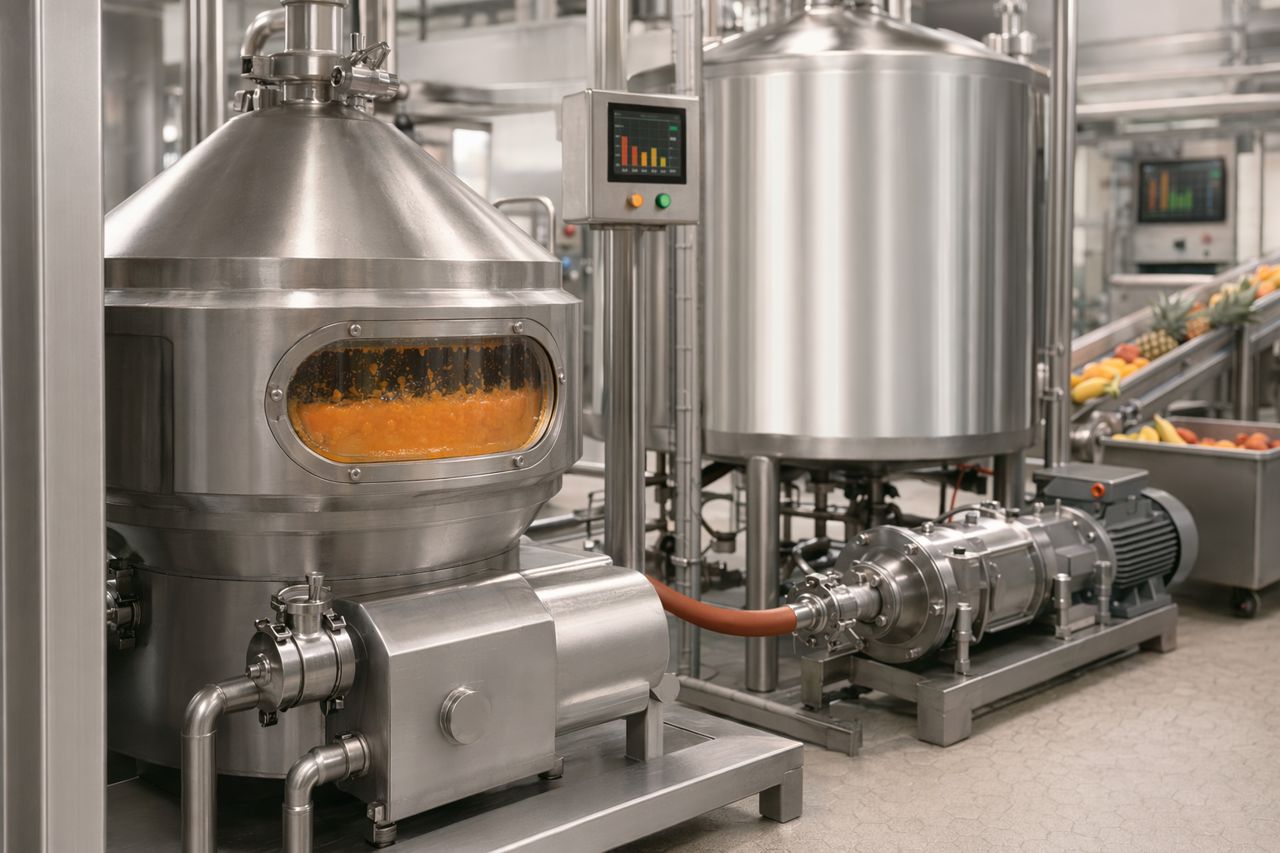
VelvetYield supports processors as an enzyme supplier for fruit puree processing with fruit-specific enzyme systems and practical application guidance for puree transfer, finishing, filtration, and texture control.
A single enzyme approach rarely fits every tropical fruit base. The main reason is substrate variation.
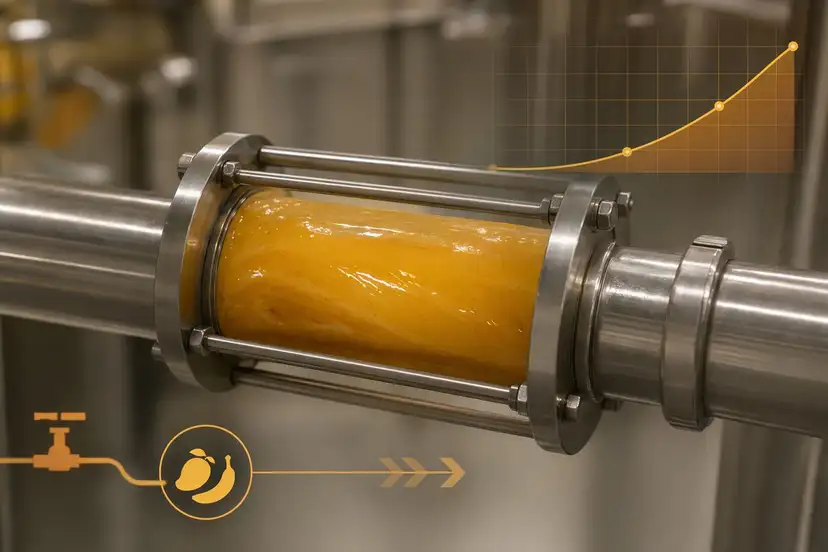
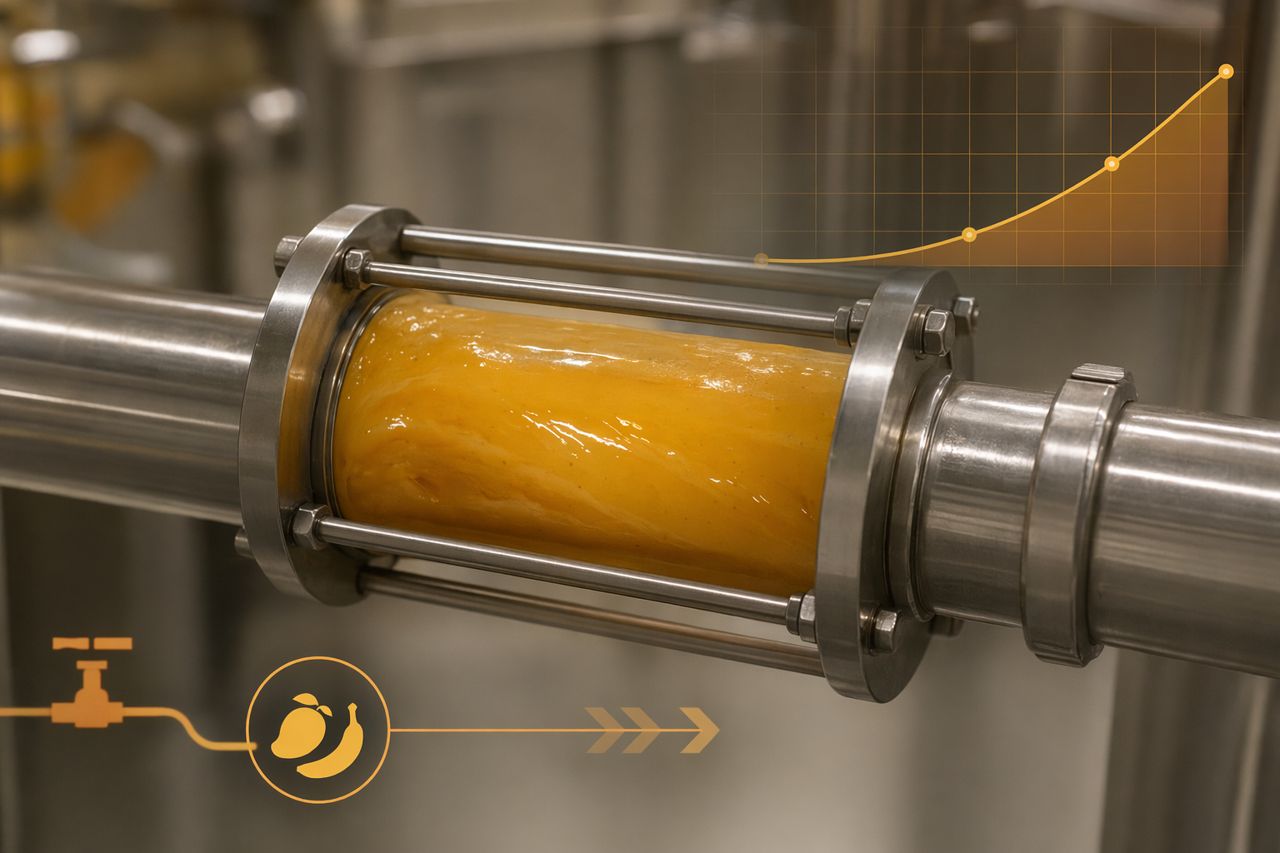
Mango puree often carries fine fibrous material and a dense pulp network. Even when the puree is fully ripe and well-milled, that structure can increase apparent viscosity and slow transfer through pipes, heat exchangers, screens, and holding systems.
Typical plant symptoms include:
A targeted enzyme program can help loosen pectin-rich structure and improve flow while protecting the desired full-bodied mango mouthfeel.
Banana puree is different. Its handling behavior is often influenced by starch condition, maturity, heat exposure, and blend design. A puree that moves well at one step may thicken during holding, heating, cooling, or transfer.
Common issues include:
For banana-containing bases, enzyme selection needs to consider starch and texture together. Over-treatment can thin the product too far; under-treatment leaves the process fighting back pressure and long transfer windows.
Guava, papaya, pineapple, passion fruit, and mixed tropical bases can add insoluble fiber, seed tissue, variable pectin, and natural haze. In multi-fruit baby food or puree blends, each fruit contributes to the final flow curve.
This is where plant trials matter. The best enzyme choice is not only the one that reduces viscosity. It is the one that delivers a controllable puree through the actual line, under the plant’s real hold time, heat profile, and texture target.
For puree transfer, the goal is not simply to make fruit thinner. The goal is to make the process more predictable.
A well-matched VelvetYield program can be evaluated against practical plant-floor indicators:
The target is controlled flow with the texture your product brief requires.
Mango applications often benefit from pectin-focused and fiber-supporting enzyme activity chosen to improve pulp release and transfer behavior without stripping the puree of its characteristic body.
Best practice is to confirm:
Banana requires more caution. The enzyme strategy should account for starch-related body, ripeness variation, and the final blend texture. The goal is smoother transfer and repeatable viscosity, not an uncontrolled drop in structure.
Key checks include:
In blended tropical puree, the enzyme system should be tested on the actual formulation or a close plant-representative model. Mango-banana, banana-passion fruit, mango-guava, and papaya blends can behave very differently even when soluble solids appear similar.
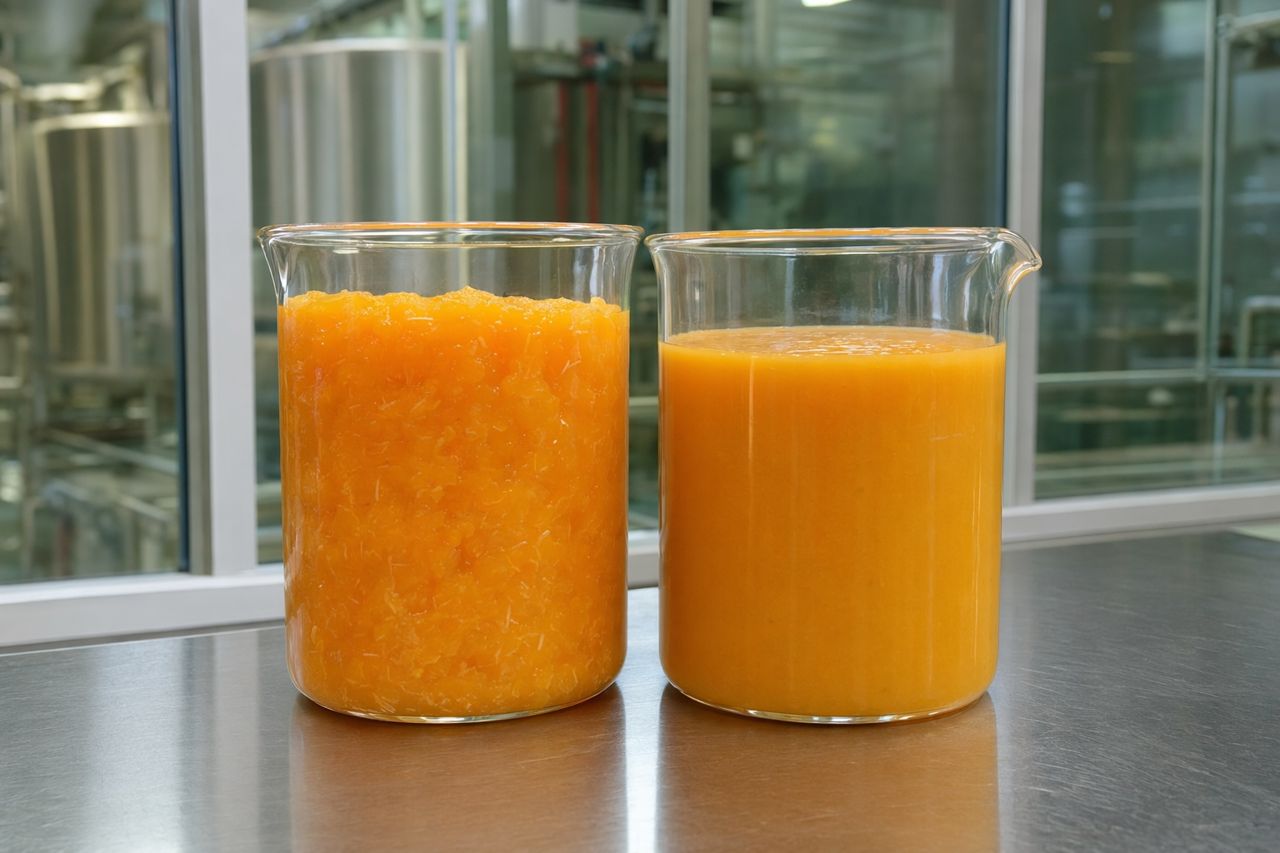
A good trial compares treated and untreated puree for:
VelvetYield recommends a practical, low-disruption approach before production rollout.
This keeps the work grounded in production value, not lab-only theory.
Depending on the plant layout, enzyme addition may be considered after crushing or pulping, before refining, during controlled holding, or before a pressing or finishing step. The right point depends on access, mixing quality, residence time, and how quickly the puree moves into heat treatment.
VelvetYield helps plants define that window so the enzyme has enough opportunity to work while the process remains safe, repeatable, and compatible with puree quality expectations.
When qualifying an enzyme supplier for fruit puree processing, process managers should ask for more than a product name. The supplier should be able to support production decisions.
Look for:
If mango, banana, or tropical blends are slowing transfer, blinding screens, or creating batch variation, VelvetYield can help you evaluate a practical enzyme route.
Share your fruit base, process step, target texture, current bottleneck, and trial volume. Our team will recommend a suitable starting approach for plant validation.
Tell us your application and volume — we reply with pricing and lead time.